Recently I’ve been thinking a lot about lichens. The complexities and abilities within these tiny things has a hold on my brain that refuses to let me go. The more I learn about them the more I feel like I’m staring into space, With every new fact I feel smaller and smaller in comparison the the universe as my awe for nature grows. To me lichens are an incredible representation of the interconnectedness of everything, and they are just one of the incredible species that make the world so awe inspiring.
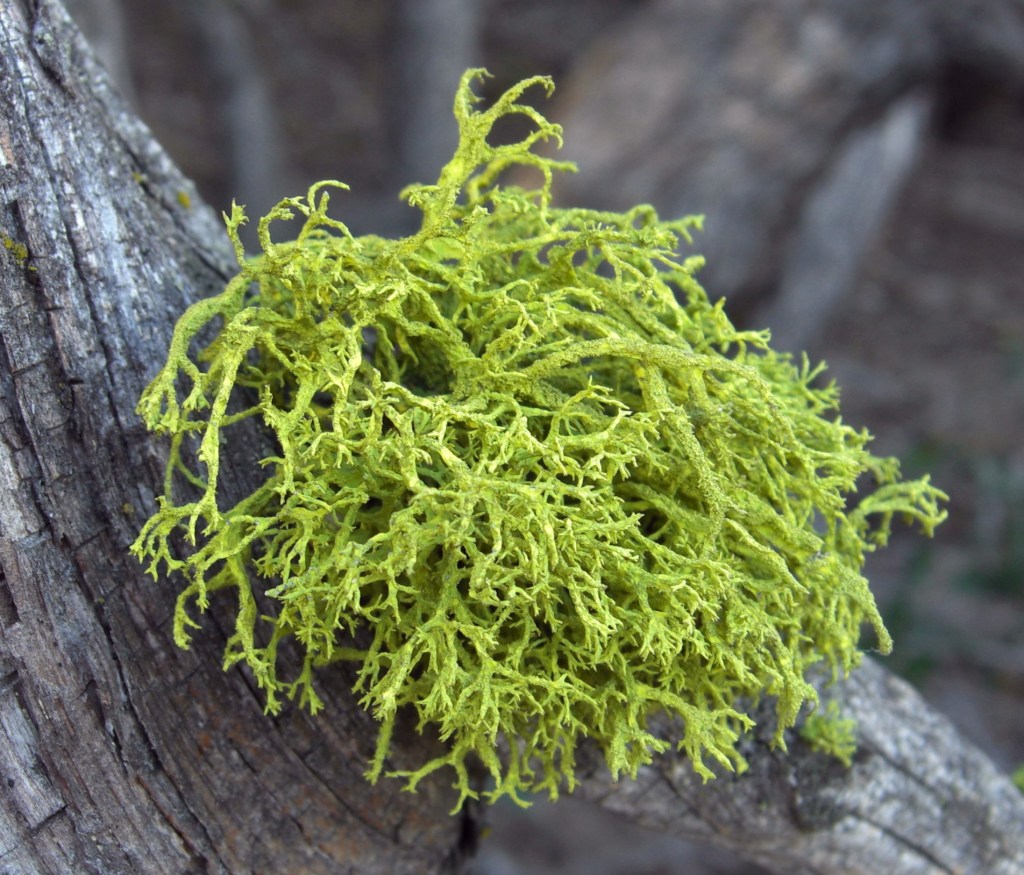
While they take on many forms, lichens are made up of a Mycobiont(fungus) and a photobiont(algae)1. These two organisms have developed a partnership where the Mycobiont collects nutrients and provides protection and the Photobiont creates sugars through photosynthesis. With these mighty powers combined the lichen is greater than the sum of its parts(like the Megazord) allowing it to live, survive, and thrive in more places than either part would be able to on its own. This partnership is also not necessarily permanent the two organisms can live completely independently but, given the option, often choose not to. When growing fungus and algae separately but in close proximity they actively choose to intertwine and work as one2.
“Within lichens, branches of the tree of life that had been diverging for hundreds of millions of years were doing something entirely unexpected: converging”
Merlin Sheldrake3
These little guys really shook things up. Multiple species coming together to form a new organism? with its own unique identity? the concept was unheard of and rejected by many. The existence of lichen forced scientists to look at evolution differently. Instead of a competitive process in which all things are in constant conflict, lichens illustrated the evolutionary benefits of collaboration and connection. Evolution is widely thought of as a function of divergence. Think of the Galapagos Finches, famous for their exemplification of the diversification, specialization, and adaptation. They are literal poster children for evolution with their different beaks appearing on the walls and in the textbooks of classrooms across the world. The birds are, taxonomically speaking, neat well behaved branches on that evolutionary tree. These fuzzy, crusty, leafy, or scaly creatures on the other hand exist in direct opposition to any neat taxonomic lines.
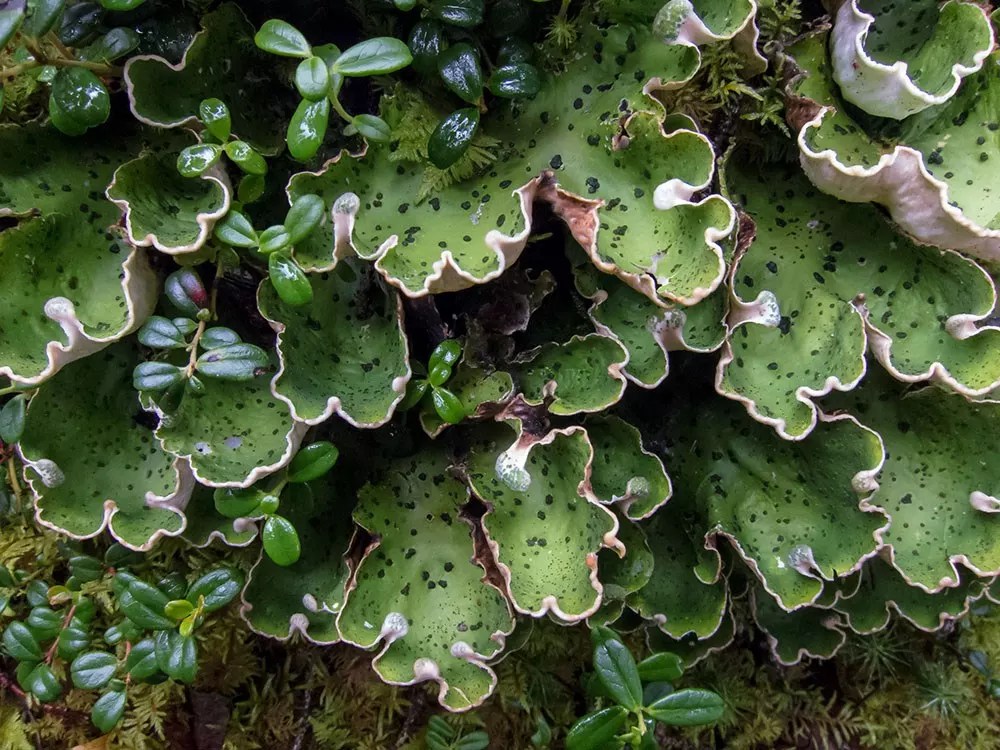
The lines of questioning brought about through greater understandings of Lichens led us to a deeper understanding of how symbiosis works within our own bodies. There is at least 150 bacteria in the human gut that play an active part in how we function. They can stimulate white blood cell production4 , significantly effect our immune system5, and can even effect gene expression6. It has been found that a Japanese strain of gut bacteria, likely adopted from a marine relative, triggers genes that can metabolize complex sugars. It’s mind boggling. It puts in to question the very idea of humans as individuals. We are in ourselves ecosystems full of formerly imperceptible actors in constant, interspecies communication.
“An Organic being is a microcosm-a little universe, formed of a host of self propagating organisms, inconceivably minute and numerous as the stars in heaven”
Jan Sapp7
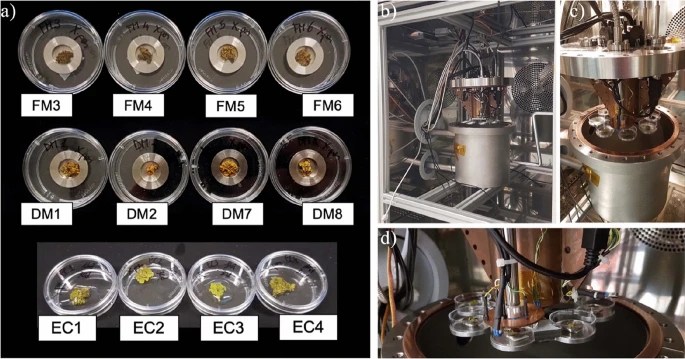
Lichens are everywhere. Rocks, trees, bricks, rooftops, antlers, and space. In what seems almost like a special treat for me with my affinity for the cosmos, lichen themselves are at the forefront of space travel. They were chosen for a ride to the stars due to their level of complexity and their sheer ability to survive. Lichens will take hold in extremely adverse conditions, clinging to rocky sea swept cliffs, on the hot sands in desserts and have even been found, inexplicably, inside of slabs of granite. This incredible survival ability makes lichens “Extremophiles” or organisms that we believe could potentially survive on other worlds, and on top of that they are complex organisms this coupled with their symbiotic nature makes them neat portable ecosystems perfect for extraterrestrial study. To test their limits Lichens were placed in a sort of mars simulator where they were exposed to the conditions of the red planet. In this test scientist found that the lichens reduced their photosynthetic activity to almost nothing, effectively going dormant for thirty days and then bouncing right back when they were rehydrated8. With this test under their belt lichens got the green light to go to space and have even kept astronauts company on the International Space Station. Over the course of multiple studies lichen have been found to survive radiation, extreme temperatures, and the vacuum of space and return to full function once rehydrated. Lichens in their various form have been used as medicines, dyes, Ph indicators, and even as food so not only are they useful as test subjects to understand the effects of space but they are also ideal companions for if humanity ever becomes an interplanetary species. With Lichen at our side we could have a living survival kit with us as we expand into the stars.
This blog took me forever becuase I The further down the rabbit hole I went the more complex things got, we learn more and more about lichen, their capabilities and their structures constantly and know there is still more to be seen. The fact that something so simple looking at surface level is so ridiculously interesting brings me so much joy and hope. This post is just the tip of the tip of the iceberg and I hope I did the little guys justice.
Thank you for reading,
Joseph Parker
go look at a lichen
- Spribille T, Tuovinen V, Resl P, Vanderpool D, Wolinski H, Aime MC, Schneider K, Stabentheiner E, Toome-Heller M, Thor G, Mayrhofer H, Johannesson H, McCutcheon JP. Basidiomycete yeasts in the cortex of ascomycete macrolichens. Science. 2016 Jul 29;353(6298):488-92. doi: 10.1126/science.aaf8287. Epub 2016 Jul 21. PMID: 27445309; PMCID: PMC5793994. ↩︎
- 1. Scott F. Gilbert, Jan Sapp, and Alfred I. Tauber, “A Symbiotic View of Life: We Have Never Been Individuals,” The Quarterly Review of Biology 87, no. 4 (December 2012): 325–41, https://doi.org/10.1086/668166. ↩︎
- 1. Merlin Sheldrake, Entangled Life: How Fungi Make Our Worlds, Change Our Minds and Shape Our Futures (New York, NY: Random House, 2021). ↩︎
- Cash, Heather L et al. “Symbiotic bacteria direct expression of an intestinal bactericidal lectin.” Science (New York, N.Y.) vol. 313,5790 (2006): 1126-30. doi:10.1126/science.1127119
↩︎ - Chow J., Lee S. M., Shen Y., Khosravi A., Mazmanian S. K. 2010. Host bacterial symbiosis in health and disease. Advances in Immunology 107:243–274. ↩︎
- Hehemann J.-H., Correc G., Barbeyron T., Helbert W.,
Czjzek M., Michel G. 2010. Transfer of carbohydrate active enzymes from marine bacteria to Japanese gut microbiota. Nature 464:908 –912. ↩︎ - Jan Sapp, Evolution by Association: A History of Symbiosis, September 15, 1994. ↩︎
- 1. Rosa de la Torre Noetzel et al., “Lichen Vitality after a Space Flight on Board the Expose-R2 Facility Outside the International Space Station: Results of the Biology and Mars Experiment,” Astrobiology 20, no. 5 (May 1, 2020): 583–600, https://doi.org/10.1089/ast.2018.1959. ↩︎
 Rumbly Race Co
Leave a comment