Hello dearest readers,
I fell off a ladder and hurt my wrist and that seems like a good excuse for why I’m bad at getting these out with any regularity. Also in fun news as we plunge towards the winter months the heat in my apartment just stopped working a couple days ago and I don’t know when it will be fixed. So with cold on my toes and my brain lets head to Norway.
The Well Man
Sagas are an important source in understanding the history of the Norse countries. Including Iceland, Sweden, Norway and surrounding areas these sagas tell of the people and events that shaped this region. Sagas come from oral tradition passed down from generation to generation before eventually being written by scholars and historians. Like many sources told and retold these stories became infused with embellishments and mythos creating larger than life characters and great epic tales but still remain a fairly accurate source of historical information. These Sagas tell of great kings and warriors, epic battles and sieges, and of a man whose body was thrown down a well.
The Sverris Saga centers around the tales of king Sverre Sigurdsson who lived and ruled in the late 12th and early 13th centuries. This saga has been vital in understanding Norway’s history and tells of the power struggles that defined the time period. Within this saga Sverre and his men the birkebeiners, so named becuase of their use of birch bark as added leg protection, were attacked by the Baglers, who represented the Roman Catholic Church (Bagall meaning “Bishop Wand”) , at Sverresborg Castle. in this attack the Sagas tell of the Baglers sneaking in while the people within the castle were eating and burned everything within the walls to the ground leaving the people with little more than what they could carry. During the attack a dead body was thrown into the drinking well where he remained for over 800 years when archeologists uncovered him.
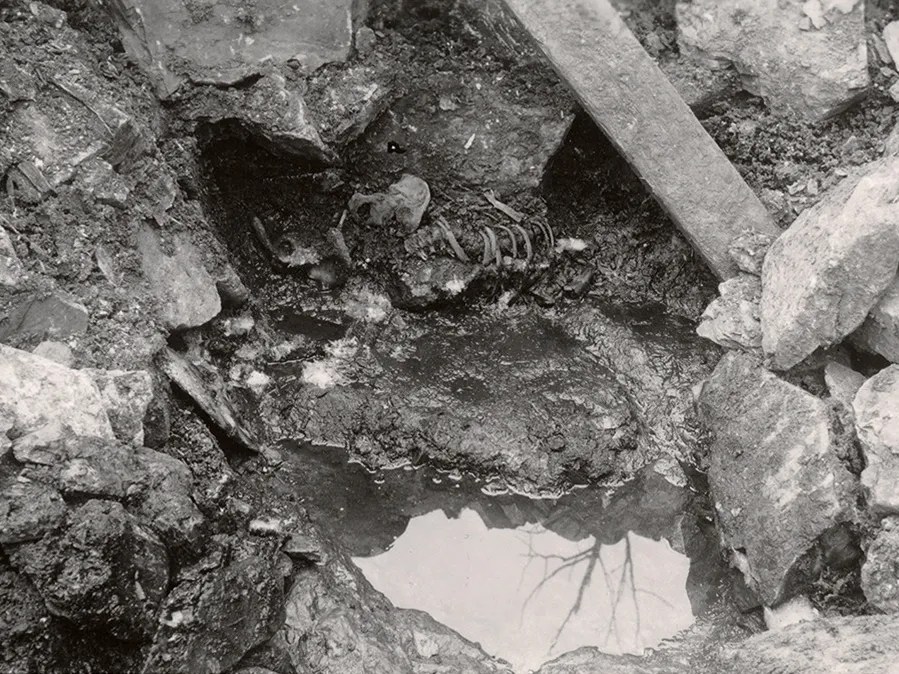
The Well Man was an incredible find. While finding a body at the bottom of a well is interesting on its own his remains also provided a wealth of information. Well Man’s genome sequencing revealed that distinctive genetic markers were present in Norse populations long before originally thought opening up new and interesting investigations of how these genes developed. In addition it was found that Well Man’s were closer to that of Southern Norwegians meaning the Baglers may have tossed one of their own dead into the well rather than one of the birkebeiners as originally thought. Most interestingly for me though is the fact that Well Man’s very existence verifies and adds context to at least a portion of these ancient, generational , stories. With more context and information like the Well Man we can contextualize, alter, verify, and overall understand historical sources better. Well Man is a representation of interdisciplinary discovery and while we may not know his real name his story only grows centuries after his death further connecting him to the heroes and legends of the sagas he helps to illuminate.1
Thanks for reading,
Joseph Parker
- Corroborating written history with ancient DNA: The case of the Well-man described in an Old Norse saga
Ellegaard, Martin R. et al.
iScience, Volume 27, Issue 11, 111076 ↩︎
 Rumbly Race Co
Leave a comment